Showing posts with label objects. Show all posts

Wednesday, April 25, 2012

everything I own in a paper bag

58 Papercraft Fashions

Plato s Collection 2
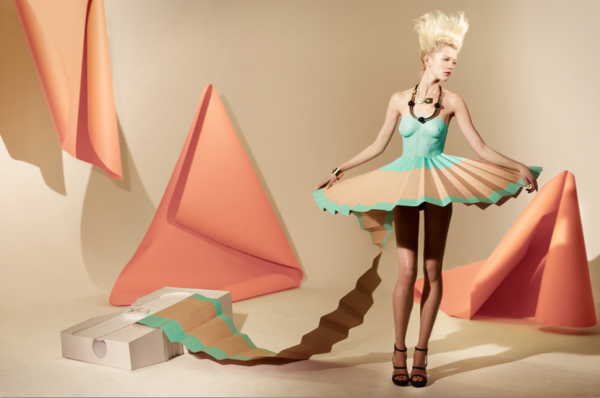
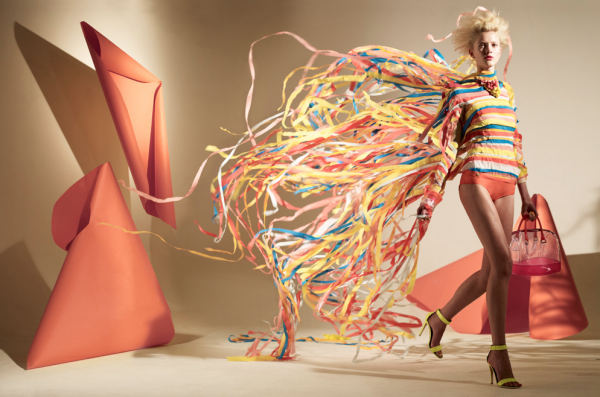
Paper is the most fascinating medium.  It can be so pliable, so malleable to the touch, and yet, so fragile to manipulate.  I imagine it takes a great deal of patience and calm to create these amazing structures created by Alexandra Zaharova & Ilya Plotnikov (hat, b&w dresses, bottom) and Matthew Brodie (technicolor piece, top).  I also imagine it takes a great deal of time.

I'm pinning these images on my wall today to remind myself that a creative project is only as good as the time invested in its cultivation.  Every few minutes applied towards even a fragment of that project means something.  Sometimes a cut, no matter how small, makes the entire piece fit together.  That goes for poems, stories, paintings, sewing projects, and sourdough starters, as well.


Friday, March 23, 2012

Warm Cozies

We're averaging about two doctor/hospital/ER visits a week in our house, so needless to say March has stomped her way in and is throttling us by the neck.  Rashes, viral infections, and unknown abdominal pains need beautiful things to combat their miserable company.  Here is how I'm distracting myself:


Yeah, they did.  Prada put a rocket on it, and now my fever dreams are waaayy better than those silly old flying dreams I used to have as a kid.


I spent Halloween of 2011 on an incredibly long flight: final destination Osaka, Japan.  Once we arrived, I was both grateful and disheartened by the fact that this was a work trip, and said work would considerably cut into the amount of time available for shopping.  This was a dramatic, inflated understatement.  We spent all of 4 hours (of a 10-day trip) on extracurricular activities.  The onsen beat out the boutiques, but I did spend 20 glorious minutes trying on tunics at Marimekko.


Baby Alpaca Hot Water Bottle Cover 
Hand-knit baby alpaca hot water bottle cover.  For this reason alone you should own a hot water bottle.
This soup & cracker bowl from uncommon goods warms my toes just looking at the pictures.  Basil- Tomato soup?  Yes, please.  Oyster crackers on the side?  Don't mind if I do.  Oh, on your way back to the kitchen, could you just run a load in the dishwasher?  Just real quick?  I'll be right here, licking the crumbs out of this crevice...
http://data.uncommongoods.com.edgesuite.net/images/newweb/product/21208_zoom1.jpg


  Hopefully the quarantine will end in the foreseeable future.  If not, next post will be comfort foods (and how to keep them on the inside).

Friday, March 16, 2012

Feeling out the Edges


framed_objects_5
framed objects by the.
Everything looks better with the right frame.  I can't tell you how often I've seen an ordinary object transformed by just the right shade of mat, by a certain thickness of stretched wood.  I've also seen incredible works of beauty that have been dulled due to careless and cavalier approaches to packaging.   
The same can be said for people.  Presented within a certain context, people are more or less approachable.  More or less desirable.   We view our experiences and lessons by the emotions that border said events, and we understand the world around us by breaking it down into more manageable parcels of information.  Everything is contained, we just differ in our method for organization and appreciation.   
So why is it that we often find ourselves unable to recognize the awesome power of the individual frameworks that surround our everyday thoughts and actions?  What of the ways in which we frame our environments, our experiences, and our objects?  In the social sciences, framing is a powerful tool used to develop and enhance social and political movements.  It helps one to identify, define, and remedy issues by pushing forth a particular perspective.  What would happen if we were to utilize this tool not only in our social and political lives, but in experiencing the mundane everyday items as well?


Sunday, March 11, 2012

Instrumental Shifts in Perspective

I'd like to compel you to immediately visit this site:
ART DIRECTION: INSTRUMENTS FROM INSIDE on the Behance Network 

I'd post images here, but you really must see them all together as a collection (and I didn't have the patience to retrieve them all, in addition to trying to gain permission to repost the entire set).  I was blown away when I first saw the cavernous beauty of the instruments, and the soft light illuminating each photograph.  The simplicity of the message underscores the complex group of emotions I feel when gazing at these images.  

First, I am overwhelmed by the craftsmanship of these instruments; the loving care they so clearly receive on a regular basis.  Tending to the upkeep of these objects is, in itself, an act of art.  And then, I am struck by the process through which these photographs were captured, and the artful arrangement of such tiny little images.  But mostly, I am moved by the simple shift in perspective that causes the viewer to pause, and to assess the world from a whole new angle.  The impact that this one conversion has on the way in which we view familiar objects is powerful, regardless of how many times we have been exposed to this type of transformation.  

Monday, August 29, 2011

Gathering

Just finished reading Unbroken by Laura Hillenbrand.  Oh. Wow.  There are so many ways in which that book has profoundly changed my thought processes.  I'm not usually big on war stories, and wasn't exactly excited to start reading this book, but since I haven't once attended a meeting of the book club I joined in March, I figured I had better read the damn book.  I am so, so grateful that I did.

The timing for this was perfect, because my grandfather recently passed away and I couldn't help but see him scattered throughout the chapters of this book.  No, my grandfather was not an Olympic runner, nor was he held in a POW camp under unbelievably horrific conditions.  But he was a young man, far younger than myself now, who was sent to, and fought, in a war.  Who handled intricate, complicated machinery having no particular background or passion for such engineering.  Who learned how to be directly responsible for the preservation of life:  his own, as well as that of his peers and leaders.

And although there are a million different tangents that my mind wants to take when opening up this topic, what I really want to focus on, for now, is how to incorporate this whole new breadth of perception and strength that I feel after completing the book.  The raw sensation of being wholly present, of recognizing the power of actively listening to my own creative, living process.  As I have previously written, I have the tendency to rush through things; to feel inspired and then either try to get to the quick of the project, or shelve it indefinitely.  But the most frustrating part about this cycle is the feeling of powerlessness that remains for every project that ends up incomplete, untouched, or abandoned.  The inaction, or listlessness, is so subtle that I don't realize how often I put something off, or "forget" to follow through with an idea.

So one of the many, many lessons I have taken away from this book is to recognize the impact that my inaction makes in the grander view.  That the process is fueled by presence of mind, yes, but it is created through the labor of the body.  To remember that all the material we need is out there, it's just up to us to gather our own personal reserve.